The lost village of Besari
Indonesia is not just an ordinary country. Anyone who has ever set foot on one of the 18 thousand islands of this archipelago probably knows what I mean. It is impossible to describe the history, traditions, or mythology of this country in one cohesive narrative. It simply cannot be done. It is as vast and distant as its geographical dimensions (everything feels abstractly far away). One cannot speak of a single, unified Indonesian society speaking one language (although Indonesia is indeed inhabited mainly by Indonesians who use the administrative Indonesian language), but this is a huge simplification. The point is that Indonesia escapes the moment one tries to grasp it as a whole. One cannot even say that it is geographically compact rather, it is stretched out, much like the sense of time among Indonesians -stretched -across three time zones (jam keret). There have, of course, been attempts at broadly understood “unification,” namely in 1945, when the concept of Pancasila was introduced: five constitutional principles that organize the lives of hundreds of ethnic groups as a shared foundation for all. These include belief in one God, humanitarianism, national unity, democracy based on consensus and social justice. Pancasila serves an integrative function, enabling diverse ethnic and religious groups to coexist within a single political system. And in a way, it works but I still believe that a country in which more than seven hundred languages are spoken cannot be told in a single way. And then there is also a powerful religious syncretism, which will be the subject of a separate article.
The history of Indonesia is not only the story of bloody wars, centuries of colonial subjugation or turbulent social upheavals. It is also a country that hides beneath its surface an extraordinarily rich spectrum of stories about supernatural phenomena, invisible worlds and mysterious relationships between the human world and nature. It appears as a space in which the supernatural does not remain on the margins of experience but permeates everyday life and co-creates its meanings. Phenomena such as viral recordings of alleged spirits, ekspedisi mistis or the symbolic actions of pocong patrol during the pandemic show that the boundary between what is considered real and what is invisible remains fluid and ambiguous. In this context, invisible villages such as the titular Besari are reinterpreted as spiritual spaces, further reinforcing beliefs in the presence of non-material forces embedded in the landscape of Indonesia.
I will approach this kind of phenomenon with some caution. Events occurring at the intersection of parallel worlds constitute the everyday reality of Indonesians and shape their way of understanding existence. Strong symbolism and cosmological myths often determine the direction of movement within a given social group. This article is a story about the disappearance of the village of Besari, which, according to local beliefs and narratives, is now located in alam gaib, a world parallel to ours.
The mysterious village –Besari
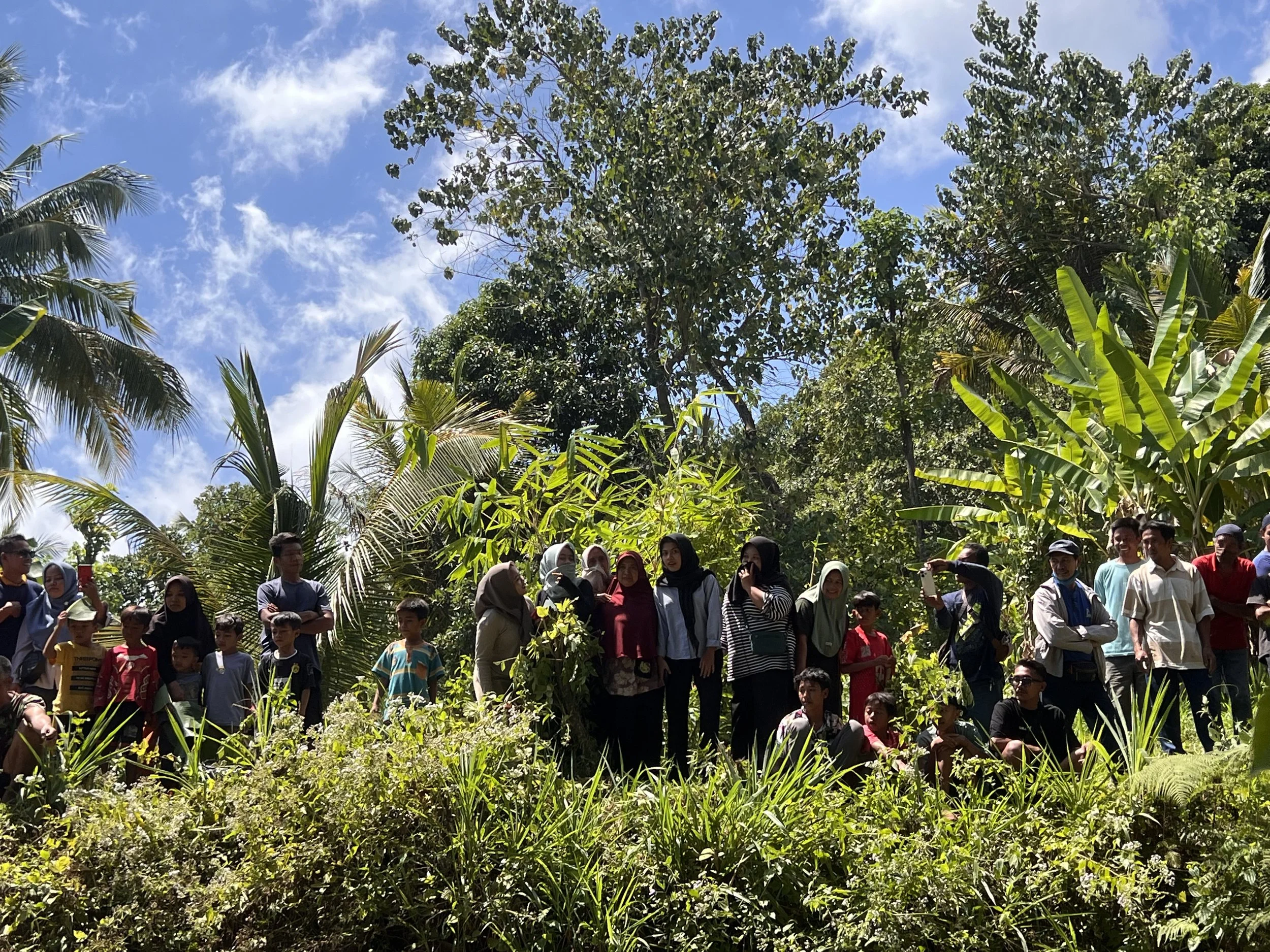
Desa (village) Besari is one of the most enigmatic places of northern Lombok. It no longer functions as an official administrative unit, yet according to local accounts it was once located near the area of Desa (village) Genggelang. According to Amiq Kholid, guardian of the traditions of Genggelang and caretaker of the local museum, Besari was part of an ancient kingdom (kedatuan) ruled by Datu (ruler) Besari. Its disappearance is dated to the 17th century, when the Karangasem kingdom from Bali conquered Mataram, the present-day capital of Lombok and established its center in Cakranegara. The Balinese king, noticing the development of Besari and the high agricultural skills of its inhabitants, proposed cooperation, but was met with refusal. In response, an army of around two hundred soldiers was sent to Labuh Gendang and when negotiations failed, war became inevitable. At that moment, the ruler of Besari gathered all the inhabitants along with their belongings in the center of the village. Then, according to legend, he performed a ritual using water in a coconut shell, recited a prayer, after which the entire Besari disappeared, transforming into dense jungle. After the disappearance, the inhabitants did not become spirits or jinn, they remained human, living in alam gaib, the invisible world. Two soldiers left at the border were said to have heard a mysterious voice instructing them to stay and pass on the story of the vanished village to future generations.
Amiq Kholid, in conversation, emphasized that there is strong evidence confirming the existence of the village of Besari. The artifacts gathered there indicate that the society of that time had developed administrative structures, a religious system, and a high level of culture. One of the most valuable exhibits is a vest (rompi) belonging to the ruler Datu Besari, equipped with 13 buttons corresponding to the number of elements of prayer in Islam (rukun salat). The museum also contains a royal oil lamp with five wicks, symbolizing the five pillars of Islam (rukun islam) which, according to the inhabitants, suggests that Besari may have been a muslim community.
A particularly interesting find is a manuscript written on lontar leaves, containing the names of rulers, the history of the kingdom on Lombok and a map of its borders. The collection also includes an inkwell used by the state secretary (Carika), old circumcision tools, golden bracelets and ancient money. What especially drew my attention was the Warige board, used for learning astronomy and observing the stars.
Situasi mistis – Besari does not let itself be forgotten
According to the accounts of Amiq Kholid, Bapak Sarihi and the inhabitants of Genggelang, Besari did not disappear forever; rather, from time to time it reminds people of its existence, as if briefly penetrating into our world. These moments cannot be precisely predicted but they often occur during unusual events. This was the case after the earthquake in Lombok in 2018, when near the Kerta Gangga waterfall, not far from where Besari was believed to have been located, a medical post run by volunteers from Padjadjaran University in Java was established. At night, between 2 AM and dawn, patients began to appear whose names disappeared from the records the following day. In a conversation I had with the village head of Genggelang -Bapak Sarihi, he recalled that during that time he received a phone call from Jakarta with a complaint about the lack of medical assistance for the villagers, which only deepened the mystery of the entire situation. When he asked the volunteers where the patients came from, the answer was always the same: from Besari. A similar story is told about a mat seller who one day arrived in a bustling village and sold all his goods, only to discover the next day that in that same place there was nothing but a dense, silent forest. Bapak Sarihi also mentioned that some time ago there had been an idea to build a mosque on the site of the village of Besari. A construction team came from Java but could not find the place that had previously been agreed upon, as if it did not exist before the plan was made. They packed up and returned to Jakarta.
From my anthropological field notes..
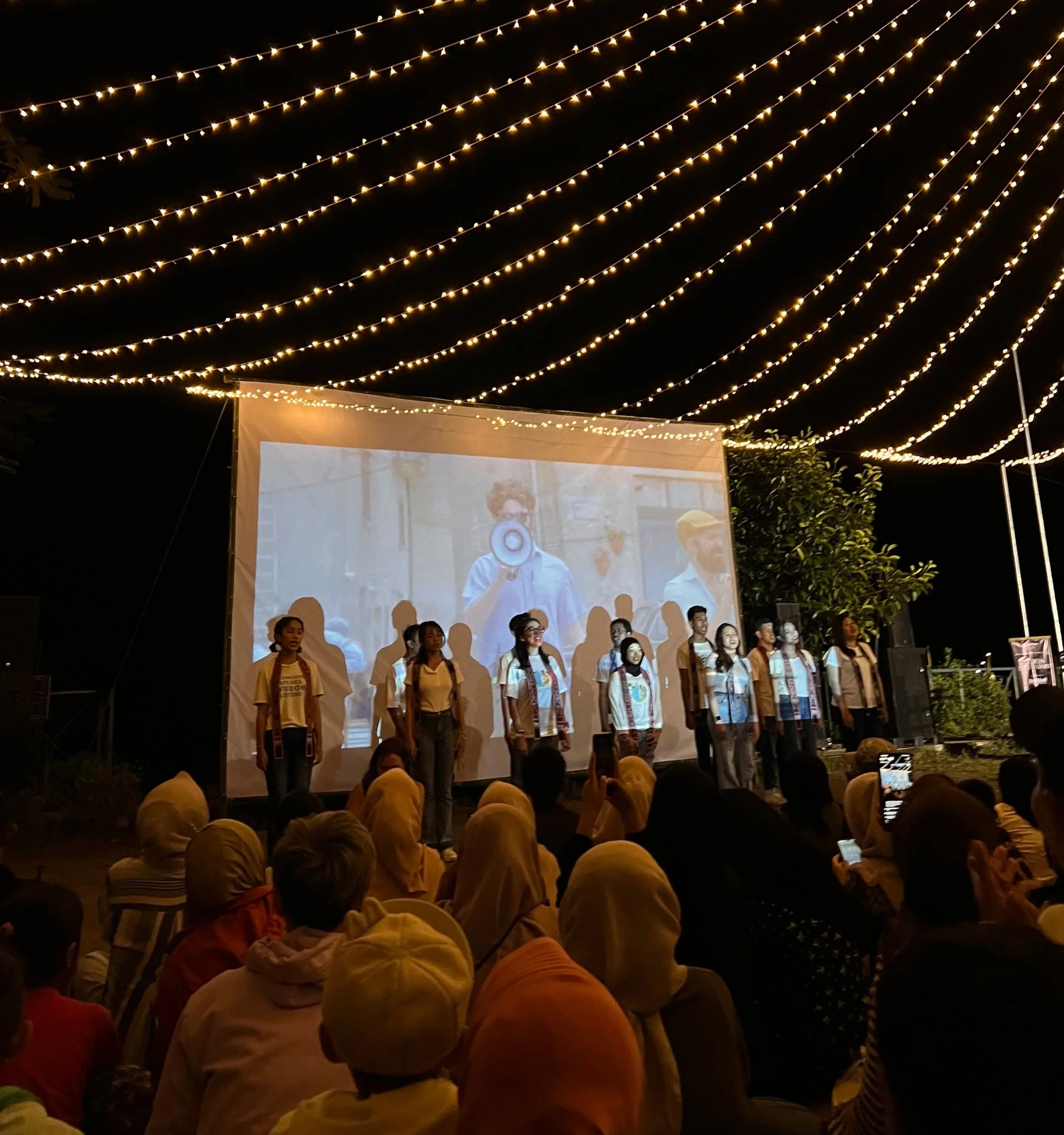
One of the most recent events connected with the presence of the inhabitants of Besari was the screening of the film “Kesindungan” (“The Other Side”), telling the story of the history and traditions of Genggelang and the protection of local cultural diversity. The production featured village residents and the role of the princess of Besari - Dene Bini Lolar Sari- was played by the well-known Balinese actress. Thanks to cooperation with ECCO Foundation, I had the opportunity to attend a pre-premiere screening, during which children’s competitions were organized and the ECCO IDEA Choir performed the beautiful song “Find Me,” a composition about the search for identity and relationships, emphasizing the importance of community. The event took place at the entrance to the Kerta Gangga waterfall, surrounded by a lush valley and rice fields. It was one of those perfect July evenings when the heat of the day slowly dissolves into the warm, motionless silence of the evening.
As time passed, more and more participants arrived. Children took their places on the ground (with me), while adults gathered at the back, talking and observing the events. The audience’s reactions were very lively, especially when familiar faces appeared on the screen. During a key scene in the film, depicting the meeting of a (lost) girl with the princess of Besari and a dance against the backdrop of the waterfall, a sudden, intense gust of wind (anging kencang) arose. Grains of sand stirred all the viewers and for a moment distracted us from watching the film. After the screening and loud applause, the celebration began…
Since I had already been to Genggelang several times and had spent some time living under the roof of the village head and his family, I could not resist greeting the inhabitants and congratulating them on such a special event. Bapak Sarihi, the village head and guardian of local customary law (adat), had overseen the organisation and daily functioning of Genggelang throughout the entire week of filming. As a person of calm disposition, he seemed visibly moved, as if something had deeply shaken him. I had the impression that his attention was strongly distracted. We said goodbye rather hastily, promising to meet again in a few days. As we were leaving the village, we noticed a gathering of residents near the mosque. Ricky, our friend and driver, rolled down the window to ask what was happening and why everyone had gathered there instead of being at home (it was already after maghrib, the last prayer of the day). We received only a brief response from one of the residents telling us not to stop and to keep driving. To be honest, none of us in the car paid much attention to it. I thought that perhaps the residents were organizing a small meeting to sum up this intense day and the end of the filming.
After returning to Mataram, when Dewi, my friend from the ECCO Foundation, and I were getting ready to sleep, Naya - my Indonesian language teacher, mentor and CEO of English Lombok Club and ECCO Foundation entered our room. Naya said she could not wait until morning with this information. Her husband Hendra, one of the main coordinators of the project, who had remained in Genggelang much longer than we had, had called her and conveyed a message that, as she emphasized, was too important to postpone. It was from Naya that we learned why, at the moment of our departure, almost the entire village had gathered at the mosque…
We did not sleep that night until morning. The conversations, stories and disbelief seemed endless. In the end, it turned out that according to many stories, we had not been alone during the film screening, the inhabitants of Besari had also been present…
What happened during the film screening?
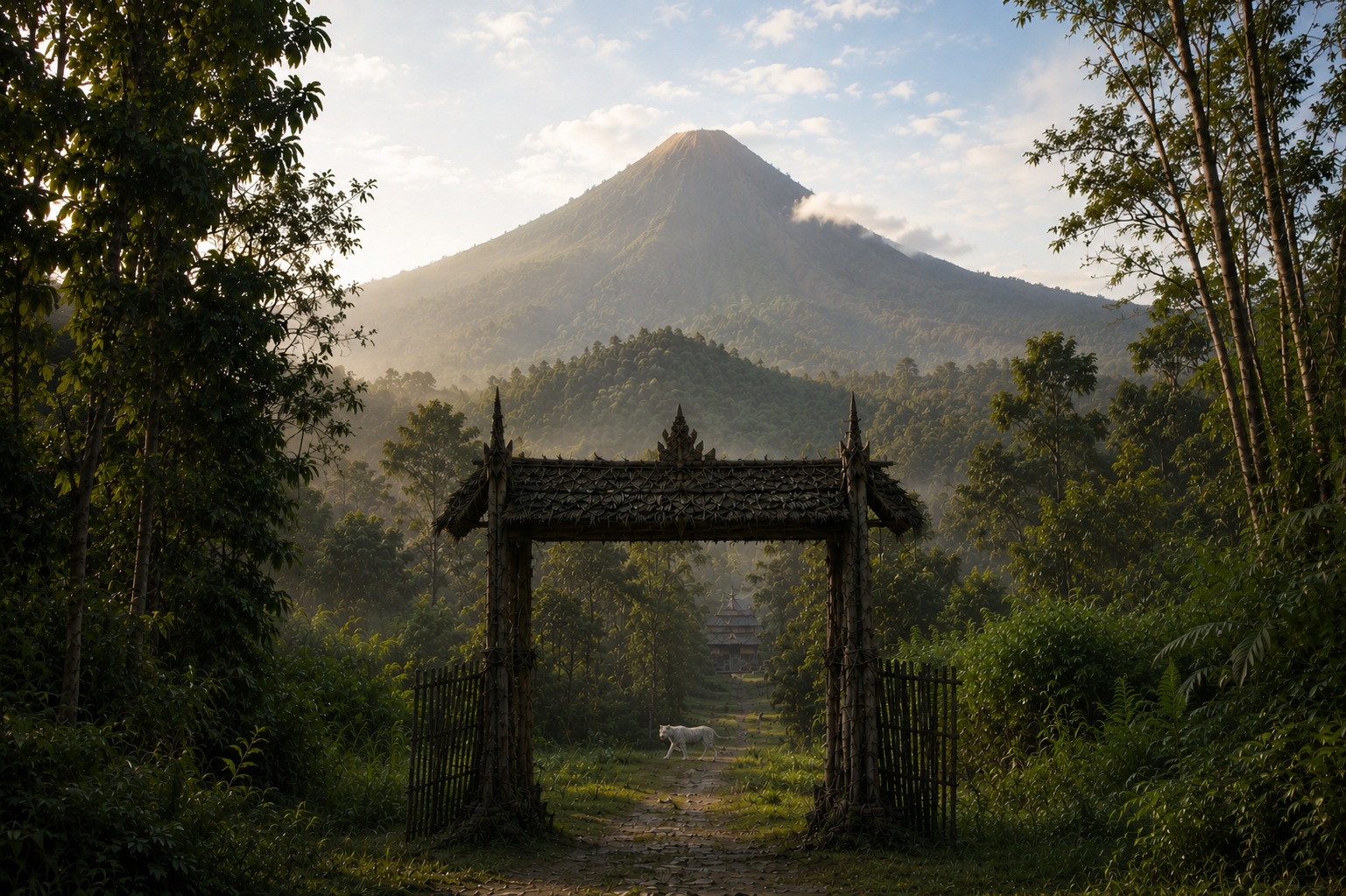
According to Bapak Sarihi, an unusual atmosphere had already been felt in the days preceding the screening. Residents reported dreams about the princess of Besari and there were also reports of sightings of a white tiger near the film set. Some members of the workshop team from Jakarta reported the feeling of the presence of many people and of being watched, despite the absence of any physical witnesses. One woman described a richly decorated entrance gate to the village that did not exist in reality. Others saw people arriving on white horses. After filming ended, the feeling of this presence suddenly disappeared.
During the screening, Bapak Sarihi noticed that the number of viewers seemed larger than at the beginning of the event, which coincided with a sudden gust of wind and triggered in him a strong sense of unease and a peculiar aura. Shortly after the screening ended, he received information about the loss of contact with one of the workshop participants staying at a nearby hotel. In response, he instructed the residents to gather at the mosque and to call back those who were leaving the village (for example, us). In his interpretation, all the earlier events (the golden gate, the white tiger, dreams of the kingdom, the strong wind) could indicate Besari’s dissatisfaction. When the residents gathered at the mosque, Bapak Sarihi prayed, split a coconut and poured water over the gathering place. In his reaction, he symbolically reenacted the situation from about four hundred years earlier, when Datu Besari, facing the threat of Balinese troops, gathered people in one place to protect them from danger.
He then asked everyone for calm and prayer and went to help a fainting woman…
According to several accounts, there was a clear atmosphere of unease at the mosque at that time. Residents felt that something was wrong, especially when the village head began to hurriedly perform a ritual and called everyone to gather immediately in one place. Each witness emphasized that they had a strong conviction that Besari were among them and expressing their dissatisfaction. The main reason was believed to be the portrayal of the princess in the film. It was noted that the actress playing the role came from Bali, a place which according to historical accounts, attacked Besari in the 17th century and contributed to its disappearance and additionally her costume did not reflect the realities of that period. Instead of the traditional Sasak kain kemben, she wore a costume resembling Balinese style, which may have been perceived as a lack of respect toward local tradition.
After completing the ritual, Bapak Sarihi, together with Hendra and the driver, went to the hotel. According to their account, the woman was lying on the ground and despite being conscious, did not respond to her surroundings. She avoided the village head’s gaze when he tried to speak to her. At one point, the word kesurupan - possession - was used.
A decision was made to take her, despite her protests, to the Kerta Gangga waterfall, exactly to the same place where the scene of the Balinese actress’s dance had been filmed.
At the site, Bapak Sarihi prayed again, split a coconut and then, as a form of atonement, made an offering consisting of yellow rice, onion and an egg. When the woman got out of the car, she immediately, as if guided by an invisible force, headed toward the waterfall, involuntarily reproducing the dance movements known from the film.
No one stopped her; the men followed her at a distance, carefully observing her behavior. Her gaze remained absent, blurred. When she reached the small bridge near the waterfall, she suddenly collapsed and then regained consciousness. Bapak Sarihi and Hendra helped her up and led her back to the car. She was fully conscious and did not remember how she had ended up there. The next day, without waiting for breakfast, the woman and her team left Genggelang. On the village head’s advice, she returned to Bali by sea rather than by plane.
According to local tradition, after experiencing kesurupan, one should cross to the other shore - a river, lake, or sea- in order to symbolically cleanse the soul and prevent a similar situation from recurring.
In the meantime, while Bapak Sarihi was helping the woman at the waterfall, the gathered residents of Genggelang were waiting for his return at the mosque, clearly impatient. The events of the entire day, the accumulated emotions, and the unexpected development of the situation which prevented them from returning home did not help calm the mood. Amid loud noise, constant conversations and the exchange of stories, suddenly one of the women collapsed and lost contact with reality. It was not a complete fainting, yet at the same time it was impossible to establish logical contact with her. In the confusion and noise that engulfed the gathered people, once again that evening the word kesurupan - possession - was spoken.
The village head was immediately contacted and after taking the woman away from the waterfall, he arrived at the mosque. As he later admitted, this event was milder in nature than the earlier case at the waterfall. According to his interpretation, a “child of Besari” had come to the young woman, bored with the conversations of adults and wanting only to play and pull an innocent prank on the residents. Bapak Sarihi said that he sensed its presence, as if it were on his back and that it carried no hidden message or threat, only a desire to play. After a short prayer with the young woman, in the presence of her husband and family, she was taken to a car and safely returned home. After this event, Bapak Sarihi instructed all residents to return to their homes and refrain from going outside until dawn.
What is this kesurupan about?
In the Indonesian cultural context, the phenomenon referred to as possession (kesurupan) denotes a state in which a person’s body and consciousness are temporarily “occupied” by a being from outside the material world. This may be an ancestral spirit, a supernatural entity, the energy of a place, or another invisible being. However, it is not perceived solely as something dangerous or pathological. In many communities, kesurupanforms part of a broader cosmological system in which the world of humans and the invisible world coexist and interact. From an anthropological perspective, kesurupan can be understood as a form of altered state of consciousness, embedded in local concepts of the soul, the body and the nature of reality. This phenomenon may occur spontaneously or be ritually induced and its meaning depends on the situational context. In many cases, the person returns without any memory of what happened. Often, the intervention of someone with spiritual authority is required a dukun or a chosen spiritual guardian (Bapak Sarihi). Possession in Indonesia is a fascinating subject that will be explored in the next article.
The disappearing village as a cosmological myth
Undoubtedly, the recent events in Genggelang, which I was able to observe firsthand, as well as earlier stories about the mysteries of Besari, provide clear evidence of how strongly local identity is intertwined with a broadly understood cosmological myth. The symbolism of the invisible world, present in anthropology, mythology and cosmology, refers to the belief that reality is not limited solely to what is material and accessible to the senses. There exists a parallel dimension: spiritual, energetic, connected with ancestors or deities, which truly influences everyday life, even though it is not directly perceptible. This is not merely a belief in spirits, but a much broader way of understanding the nature of reality itself. The relationship between the visible and invisible worlds is particularly intense, as both orders penetrate each other and remain in constant mutual interaction.
Rituals such as splitting a coconut, prayer or making specific offerings (as in the case of Bapak Sarihi with rice, egg, and onion) serve to organize the relationship between people and what is invisible. In this context, one may think of the classic ‘theory of ritual’ by Victor Turner, who pointed to the importance of the transitional phase (liminality) as a moment of suspension between orders (human and invisible). It is precisely in such moments that profound transformations of individuals or entire groups can occur, symbolically reflected for example, in the strong gust of wind during the film screening.
Since what is invisible cannot be shown directly, a system of signs and symbols is used. A special place is occupied by animals such as the white tiger or the mounted procession observing the film crew, which function as guides between worlds and guardians of people: present, yet not threatening. The symbolism of colors is equally important. White, present in the image of the white tiger, indicates both purity and lack of danger but also otherness: something that goes beyond the order of everyday life and signals the presence of the sacred (sacrum). Space also plays a significant role: the Gangga waterfall, the sea or strong gusts of wind become passages between worlds or villages (Genggelang – Besari), suggesting contact with what is higher and invisible.
It is also impossible to overlook the category of aura. In the narratives of Bapak Sarihi, as well as Amiq Kholid, it was repeatedly mentioned as an experience of the felt presence of Besari. As anthropologist Clifford Geertz noted, aura can be understood as a cultural reality that adopts a specific system of meanings. In this sense, it appears both as an individual sensation and as a socially shared experience of something more, something that transcends everyday life. The aura of Besari may thus function as a subtle signal of an approaching event (such as the gust of wind during the dance of the Balinese princess), appearing even before a concrete vision or event occurs. Anthropology does not so much deny the existence of such experiences as it seeks to grasp them as manifestations of meaning. The key question, therefore, is not so much: “does aura exist?”, but rather: “how does the experience of aura become a carrier of meaning?”
Double ontology: does the invisible world really exist?
The symbolism of the invisible world leads us to reflect on the multilayered nature of reality. At this point, the concept of double ontology emerges. Ontology, in anthropological terms, concerns how different cultures understand what exists and how they define the boundaries of reality. It poses a fundamental question: does the invisible world really exist? In the Western perspective, it is often interpreted as a sphere of belief, whereas in many traditional cultures it constitutes an integral, inseparable part of the world.
Double ontology describes a way of perceiving reality in which at least two parallel orders of existence coexist, both recognized as real. The world thus has a dual character: material and immaterial and both dimensions are equally real. The relationship between them forms the axis of the story contained in this text and the key to understanding their interconnections. It can take various forms: Besari as a real, historical village whose existence is confirmed by manuscripts and at the same time as a spiritual presence manifesting itself at specific moments like during the film screening or during an earthquake.
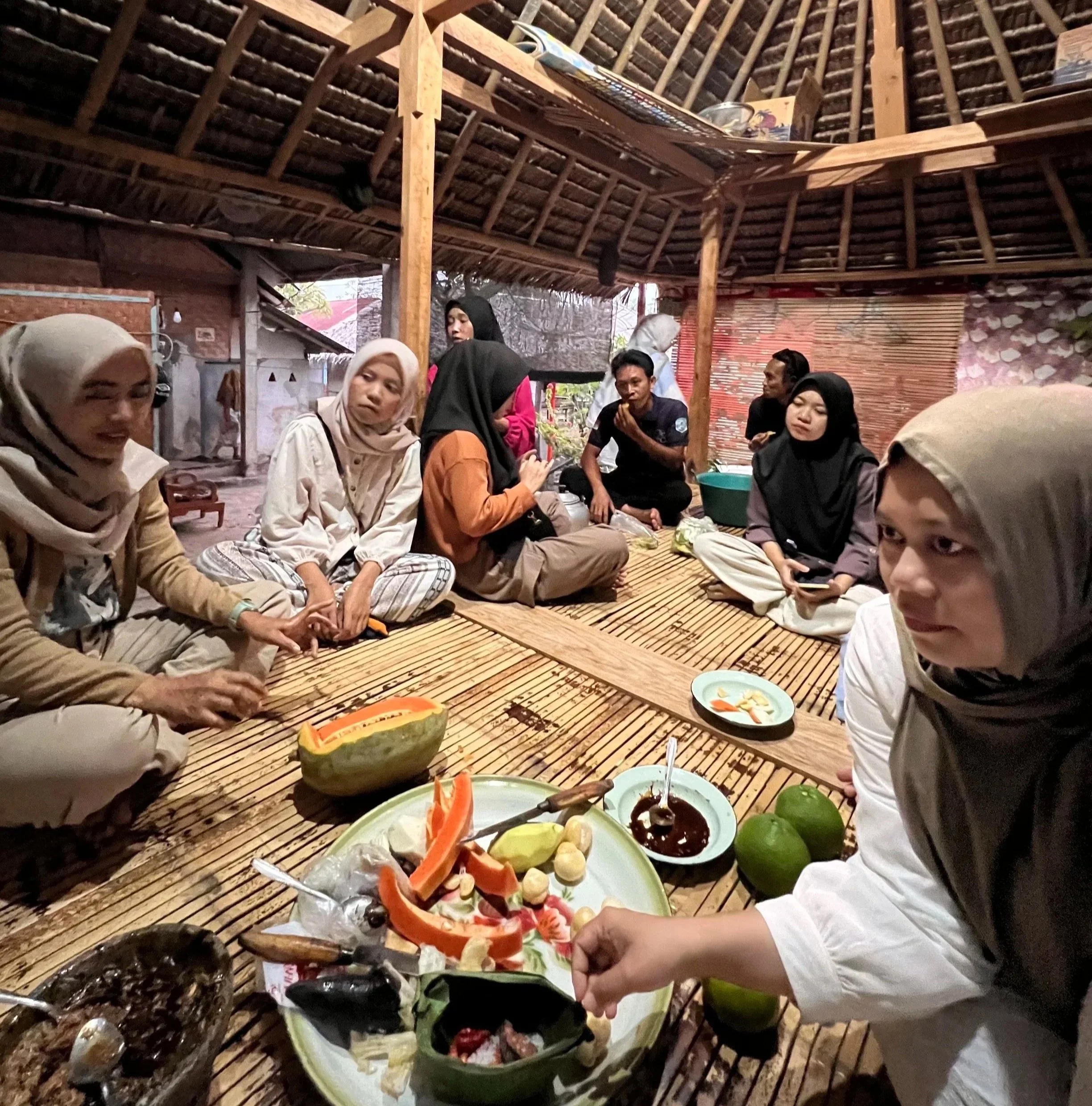
It is also worth noting that access to this double ontology is not evenly distributed. Besari can be both a physical place and a spiritual space, accessible only to selected individuals (such as Amiq Kholid or Pak Sarihi) who are able to feel or see it. The mechanism of this particular permeability between worlds strengthens community bonds and enables society to cope with change and uncertainty. Double ontology therefore fulfills an important interpretative function: it allows for the explanation of phenomena that are difficult to grasp, integrates material and spiritual experience, and creates a coherent image of reality, one in which even what seems inexplicable finds its place and meaning.