Indonesia at 81: Independence Day
When I think about Indonesia and the moments that define it in some way, it appears to me as a collection of snapshots from different events. Sometimes it is hari Jumat - the Friday day of prayer, when Muslims gather in large numbers at mosques to listen to the imam’s sermon. At other times, it is the Balinese festival of Kuningan, which I associate with gratitude, remembrance and gatherings, as well as the wonderful Galungan, whose decorations I can never get enough of - the streets of Bali can look truly spectacular! It is also a poignant moment, because the festival reminds us of the victory of dharma over adharma, good over evil; during this time, the ancestors are believed to return to their families’ homes.
Yet when I think of August in Indonesia, one memory comes to mind above all - Hari Kemerdekaan Indonesia, or Indonesian Independence Day.
Squarespace
Rethinking Independence Through an Indonesian Lens
Until recently, I thought that Poland celebrated 11 November in a ‘big way’. However, as the polarisation of society deepened and both sides of the political dispute decided to intensify the divisions among Poles even further, the holiday became a strange construct in which the line between patriotism and a pathological need to prove one’s Polishness had virtually disappeared.
My experience of this important holiday, seemingly inscribed in the DNA of my generation, has therefore become deeply distorted. As a result, I adopted a passive stance and decided that I would not celebrate it in any particular way. I also think that I had never looked at it very closely before; I simply treated 11 November as a day off work.
Hari Kemerdekaan in Indonesia, however, made me think about it much more deeply and look at the celebration of independence with anthropological curiosity.
First, however, it is worth recalling a few basic facts that will help us understand why Indonesian Independence Day is so important and celebrated with such enthusiasm.
A Brief History of Indonesian Independence
Indonesia celebrates Independence Day on 17 August. On that day in 1945, Sukarno and Mohammad Hatta proclaimed the independence of the Republic of Indonesia in Jakarta. The proclamation came two days after Japan’s surrender. During the Second World War, Japan had occupied the archipelago, which had previously remained under Dutch colonial rule for several centuries. The declaration of independence did not, however, bring the fighting to an immediate end… The Netherlands attempted to regain control of its former colony, leading to the Indonesian National Revolution, which lasted for more than four years. Indonesians engaged in both armed struggle and diplomatic efforts, seeking the support of the international community. It was not until 27 December 1949 that the Netherlands formally transferred sovereignty to Indonesia, although the question of western New Guinea remained unresolved until the 1960s.
The date of 17 August therefore symbolises not only the establishment of an independent state, but also the long struggle against colonialism.
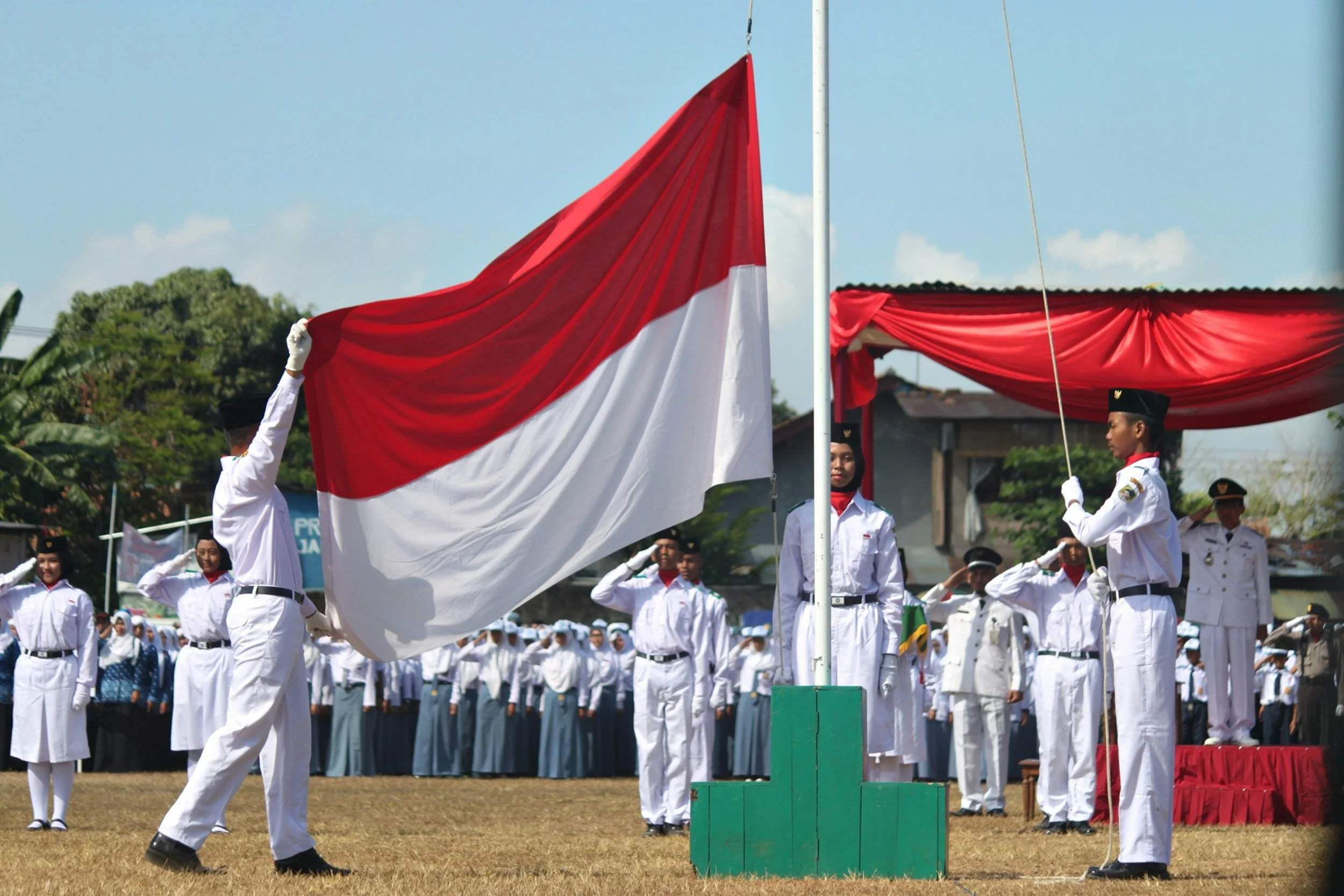
In the capital, Independence Day celebrations are particularly ceremonial. One of the most important items on the programme is the official raising of the red-and-white flag, attended by government and military representatives as well as Paskibraka, a specially selected youth flag-raising troop. During the ceremony, the text of the proclamation of independence of 17 August 1945 is also read aloud.
When we realise that Indonesia consists of more than 17,000 islands, that its inhabitants speak more than 700 languages, and that its land area covers approximately 1.9 million km² - around six times the size of Poland - one question immediately arises: how is it possible that preparations for Independence Day unite so many people and generate so much genuine joy? And why does education play such an important role?
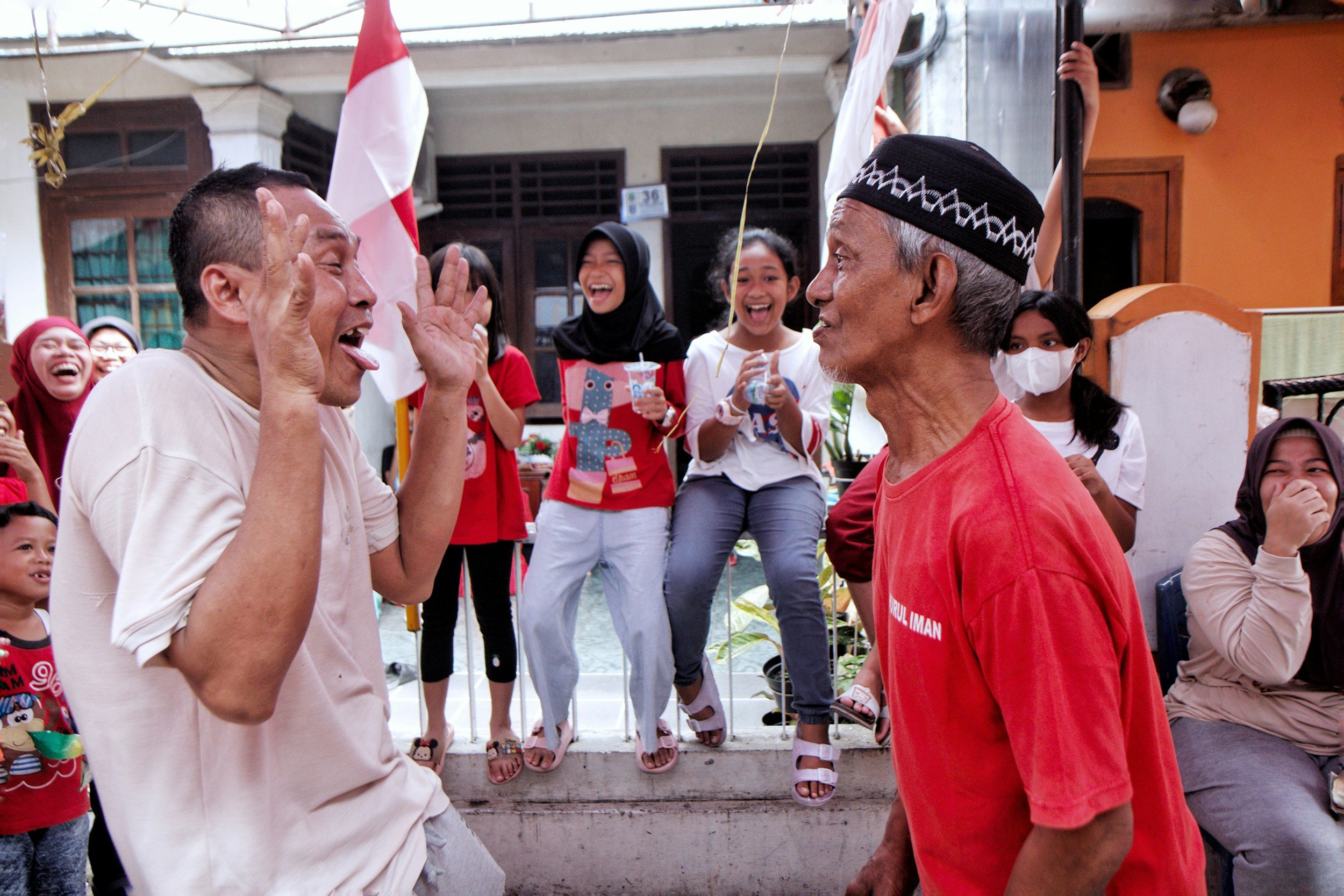
During the celebrations of Indonesia’s Hari Kemerdekaan, popularly known as Tujuhbelasan, dozens of competitions called lomba 17 Agustus, or simply lomba-lomba (competitions), are organised throughout the country. What makes the day especially fascinating is that there is no single official set of competitions, because every neighbourhood, village, school, company, and even ISLAND creates its own programme!
Squarspace
Tujuhbelasan: Competitions, Joy and Community
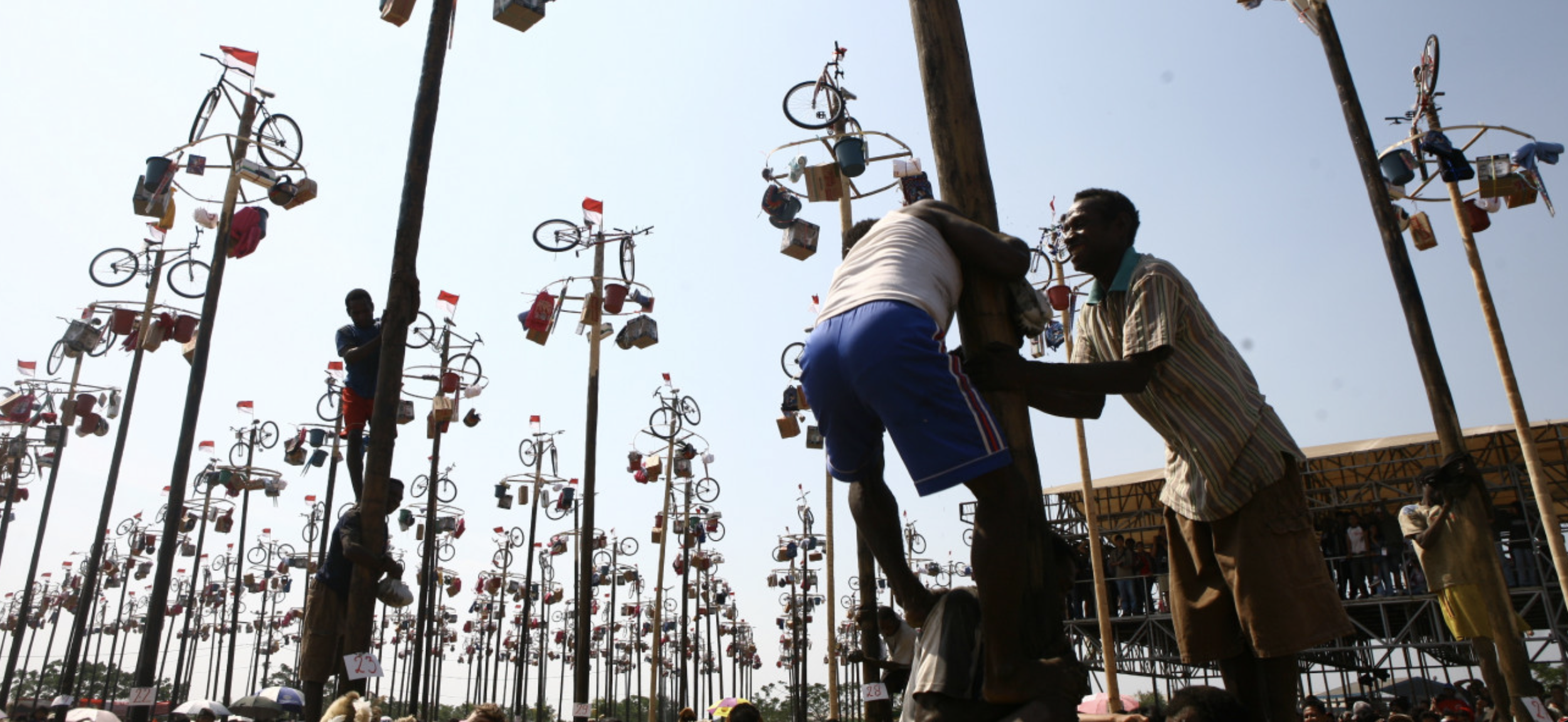
1. Panjat pinang - climbing a greased pole!
This is probably the most spectacular competition. Teams try to climb a tall areca palm trunk coated with oil or grease. Prizes are suspended at the top: food, various household appliances, a bicycle (!) and money.
A participant has virtually no chance of reaching the top ALONE, so the others (his competitors) form a “ladder” with their own bodies. Some support the others, while the next participants climb over their shoulders. The game is therefore associated with gotong royong - the idea of mutual assistance and collective action that is extremely important in Indonesian culture.
Panjat pinang already existed during the colonial period and was sometimes organised by the Dutch at weddings, birthdays, and other celebrations. After independence, Indonesians adopted the practice and gave it a new meaning: it became a symbol of overcoming adversity together. The account of its colonial origins is widely accepted, although not all popular symbolic interpretations are supported by equally strong historical documentation.
The Jakarta Post
2. Lomba makan kerupuk - eating a cracker without using your hands (one of the tastier ones!)
During the competition, krupuk (crackers) are suspended from strings at the participants’ face level. The contestants keep their hands behind their backs and try to eat the swinging crackers as quickly as possible.
The competition is inexpensive, simple, and accessible to almost everyone, which is why it is organised for both children and adults. Today, it is sometimes interpreted as a reminder of scarcity and the modest food available during the difficult years of colonialism and war.
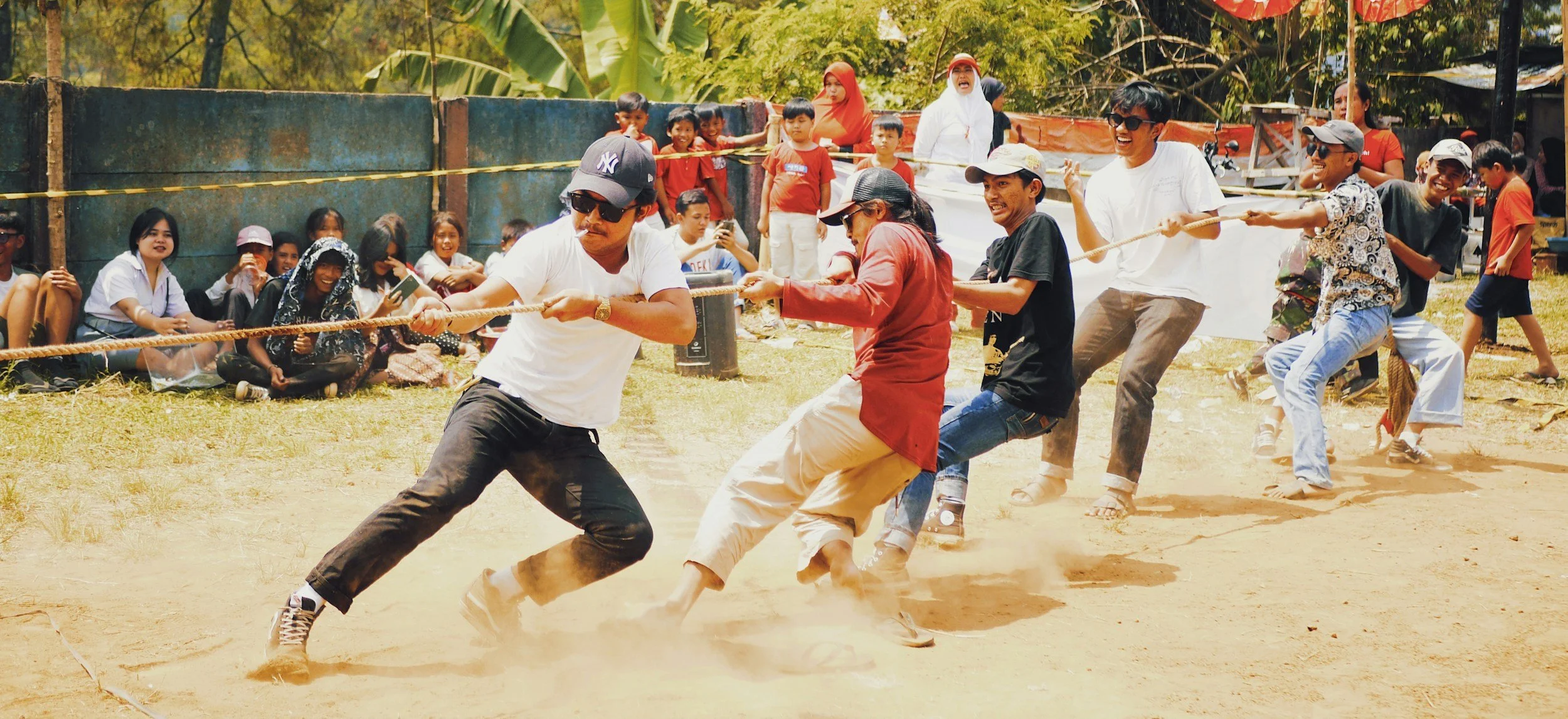
3. Tarik tambang - tug-of-war
Two teams try to pull their opponents beyond a designated line. The competition is regarded as a symbol of strength, perseverance, and cooperation. The strength of individual participants is not enough, the team has to develop a shared rhythm!
Squarespace
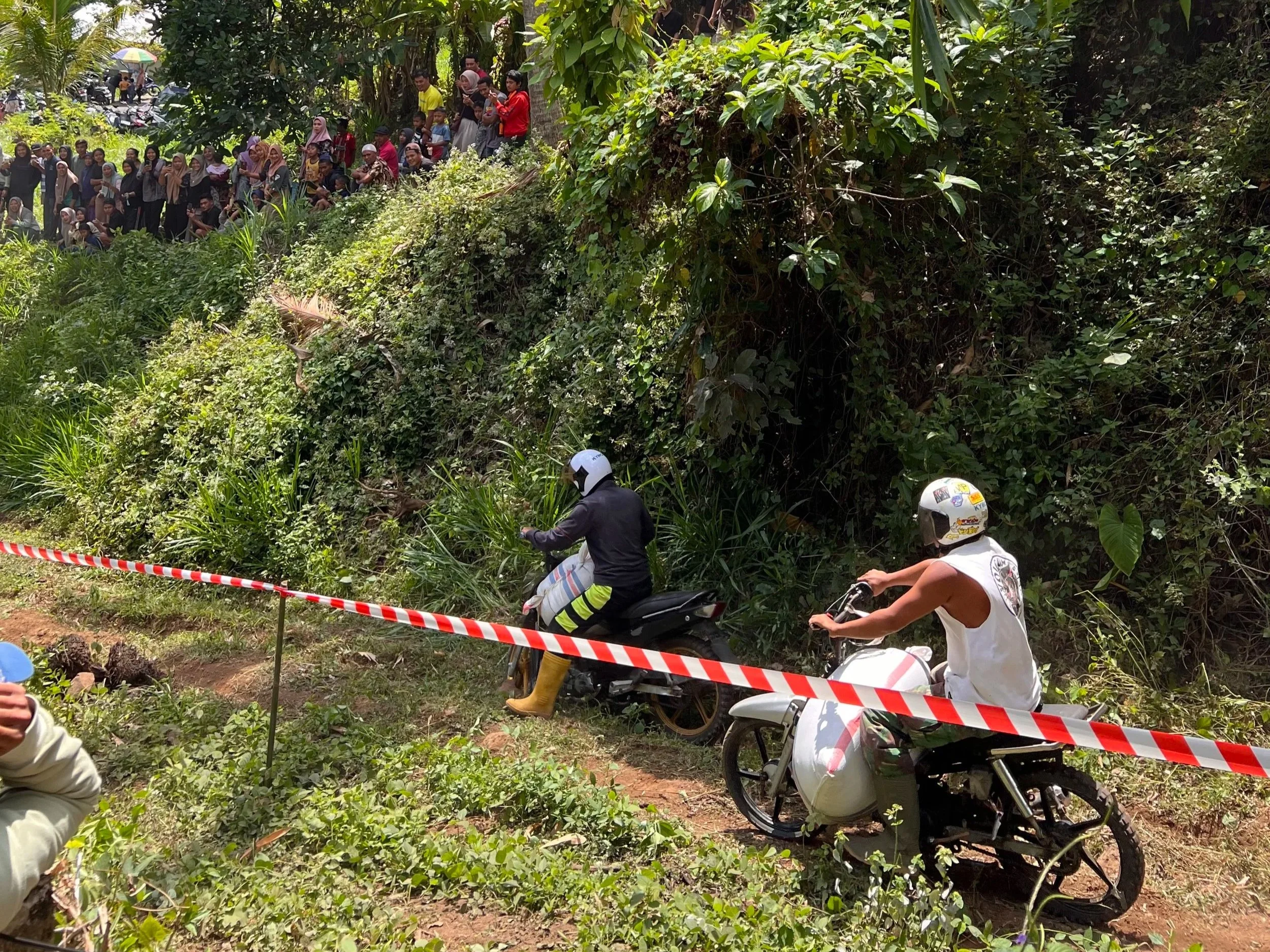
4. Balap motor taxi gabah, or a motorcycle race with a sack of rice
Participants race on modified motorcycles. A contestant must cover a steep section, lift and load a heavy sack without assistance, and then carry it up a steep, often very uneven hill amid clouds of dust and the screams of children.
The sack is usually placed between the handlebars and the rider, resting on the motorcycle and on the contestant’s thighs. In some variations, it is secured to the side or rear of the vehicle. The winner is the participant who completes the course fastest, maintains their balance, and delivers the entire load to the designated place at the finish line.
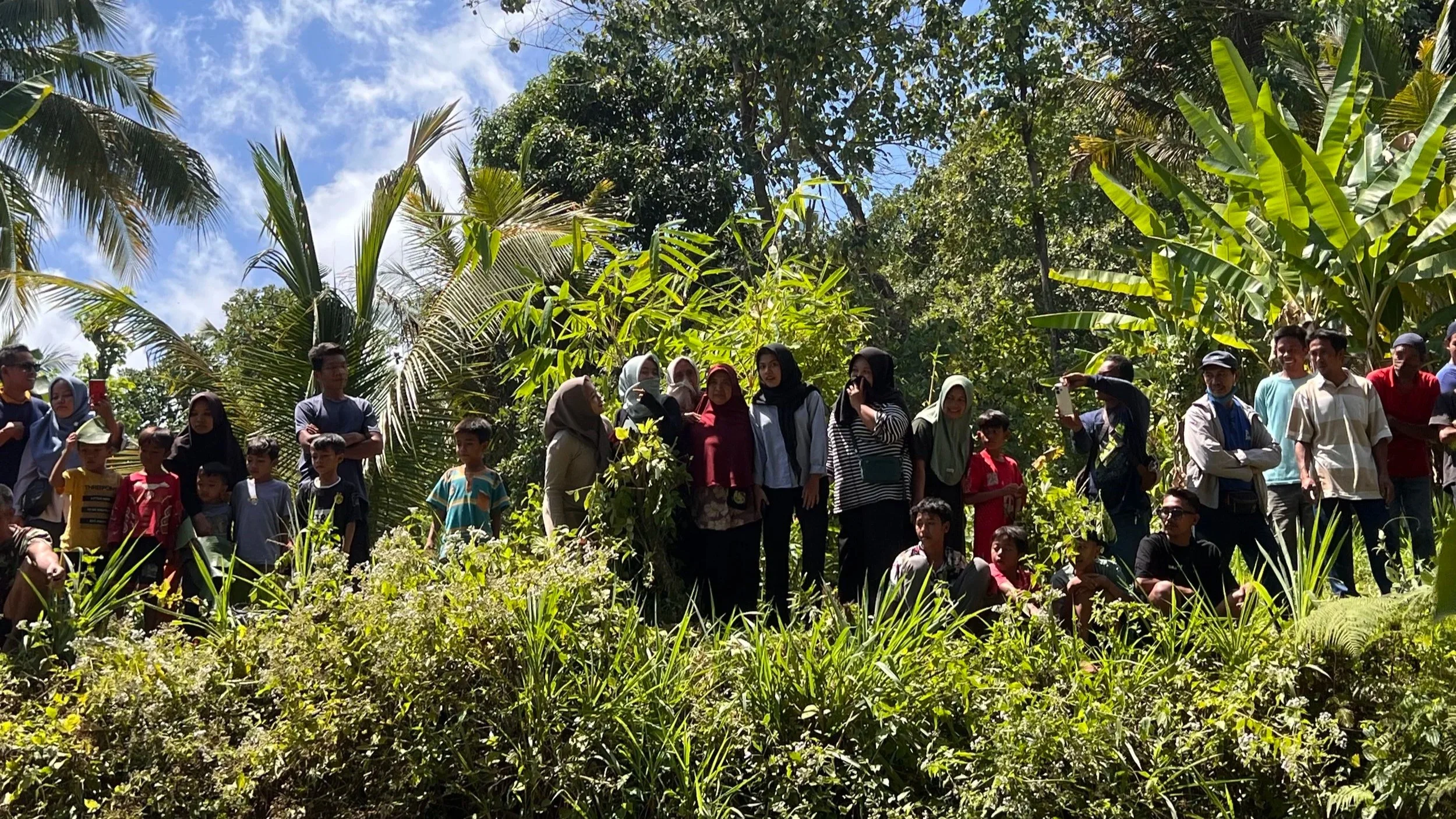
This is a competition during which it is genuinely difficult to take your eyes off the track! Every second brings something new: a sack suddenly slips off a motorcycle, a rider loses balance on the steep ascent, or one competitor unexpectedly attempts to overtake another. Although there are plenty of falls, the low speed means that they are usually harmless and prompt above all bursts of laughter and loud cheering from the crowd.
You have to see this race with your own eyes - feel the tension hanging over the course, hear the spectators’ shouts and the children’s delight, and then wait impatiently with everyone else for the most important moment. Who will prove the fastest? Who will deliver their load intact? The winner can often be determined only after several rounds, so the excitement continues until the very end! I had the opportunity to watch this competition in Genggelang, North Lombok, and I must admit that I would love to experience it again!
Ola Żołądź
Imagining the Nation Together
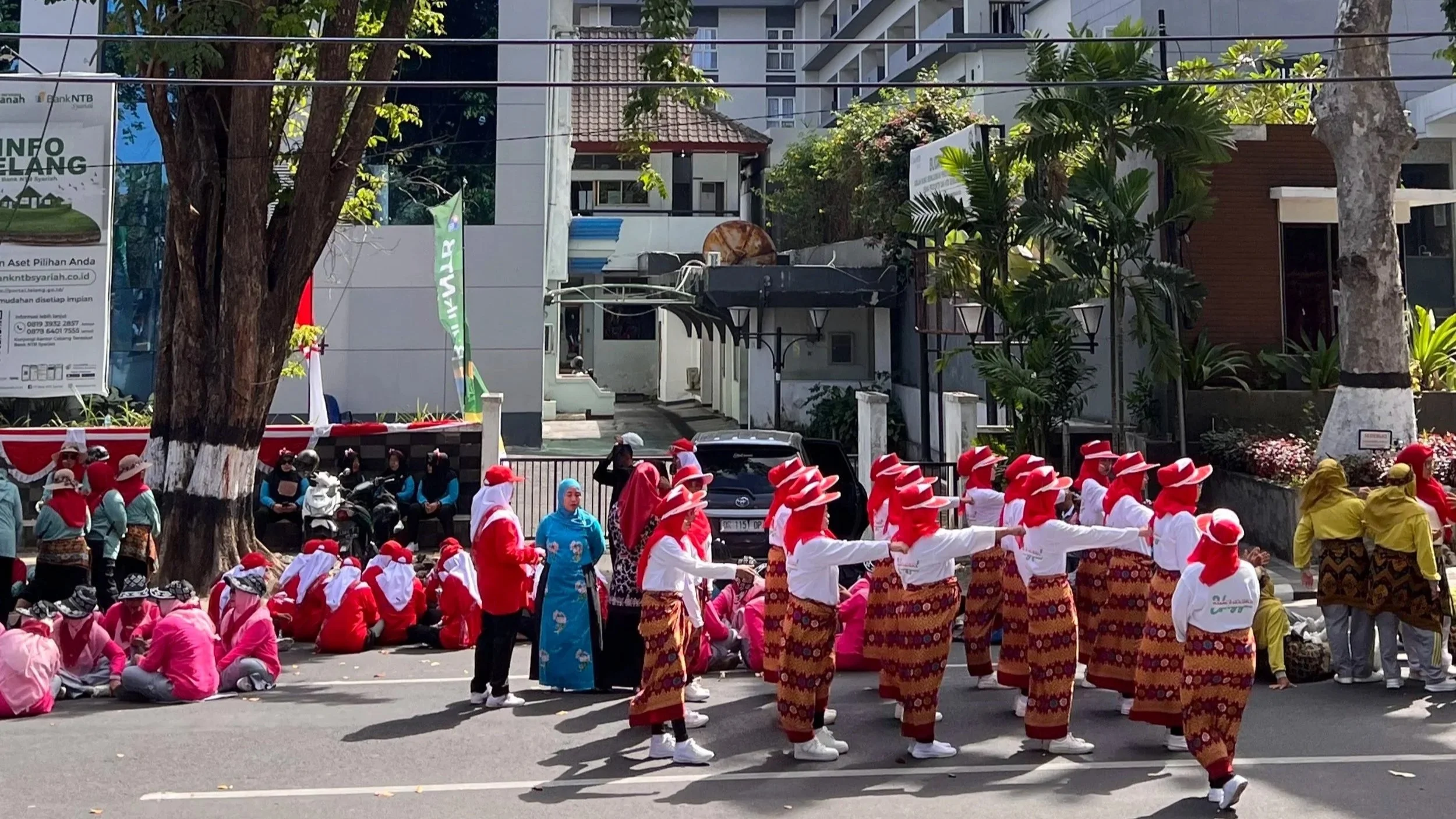
In the evening, when the official ceremonies and the final lomba-lomba come to an end, panggung hiburan rakyat begins in many places. Dangdut flows from the stage, residents dance, and the award ceremony turns into a neighbourhood party. Sometimes it is only a local band with a modest sound system; at other times it is a huge concert featuring stars and thousands of spectators. Dangdut is not an obligatory part of the celebrations, but as rakyat music it fits their communal and joyful character perfectly.
To celebrate Tujuhbelasan without hearing dangdut stars such as Rhoma Irama - the king of the genre - Elvy Sukaesih, its undisputed queen, or Siti Badriah, the contemporary performer of my favourite Indonesian version of Despacito, would be like not experiencing the day in full!
This year in Jakarta, the main event on 17 August will be the free Semarak Pesta Rakyat, held simultaneously at three locations: Monas, Sarinah, and Bundaran HI.
Ola Żołądź
Community, Pressure and Belonging
From an anthropological perspective, the Hari Kemerdekaan celebrations can be understood not only as the commemoration of a historical event, but also as a ritual through which Indonesia symbolically recreates itself. Every year on 17 August, residents reaffirm that despite immense linguistic, religious, ethnic, and regional diversity, they belong to a single national community.
Official ceremonies, flags, the national anthem, and the reading of the proclamation form an ordered state script. They remind people where the republic came from, who fought for its creation, and which values should unite its citizens. In this sense, the holiday does not merely tell history; it selects its most important elements, gives them meaning, and passes them on to subsequent generations. Children who participate in ceremonies and competitions encounter the nation in its full essence.
Benedict Anderson described the nation as an “imagined community”. This does not mean that it is fictional, but that most of its members will never meet, yet still imagine the bond that connects them. In Indonesia’s case, this has particular significance. The inhabitants of more than 17,000 islands are separated by enormous distances, languages, customs, and local histories, yet on 17 August they perform similar gestures: they display the red-and-white flag, sing the national anthem, attend ceremonies, and organise lomba-lomba.
The repetition of these actions creates a sense of simultaneity. A resident of Lombok can assume that similar celebrations are taking place at that very moment in Jakarta, Papua, Aceh, or Flores. In this way, a nation that cannot be seen in its entirety becomes almost tangible for one day.
Preparing the celebrations is almost as important as the holiday itself. Residents collect contributions, divide responsibilities, decorate the streets, build stages, prepare meals, and organise prizes. These activities bring to life gotong royong, the idea I mentioned earlier - cooperation and mutual assistance.
It is not merely an abstract “Indonesian value”. It takes a very concrete form: someone brings chairs, someone provides the sound system, someone runs the competitions, while others cook or clean. The national community is therefore built through small, everyday forms of cooperation.
At the same time, anthropological caution is necessary. Gotong royong is not always entirely spontaneous or egalitarian. Sometimes participation also results from neighbourhood pressure, the expectations of local authorities, or the need to demonstrate that a particular district is well organised. Community can be a source of solidarity, but it can also draw boundaries between those who participate actively and those who remain on the sidelines.
The celebrations create an image of a harmonious, united Indonesia, but an anthropologist should also ask what this image does not reveal. Who organises the events and decides on their programme? Do women and men perform the same tasks? Can all residents participate on equal terms? Are local traditions genuinely represented, or are they merely presented as a decorative element of national diversity?
The holiday does not erase class, religious, ethnic, or political differences. It can, however, create a space in which they are temporarily suspended or presented as parts of a larger whole. This is precisely what makes Hari Kemerdekaan so anthropologically interesting: it is not merely a reflection of an existing community. It is a moment in which community is actively produced, displayed, and experienced emotionally.
Ola Żołądź
Language as a Path to Understanding Community
In this context, education and knowledge of the Indonesian language take on particular importance. It is through language that stories of independence, local memories, jokes, emotions, and the meanings hidden behind concepts such as gotong royong, kebersamaan, and merdeka are conveyed. Without the language, we can observe ceremonies, competitions, and collective celebrations; only when we understand the participants’ words, however, do we begin to recognise what these events mean to them.
Learning bahasa Indonesia is therefore not limited to memorising vocabulary and grammatical rules. It is also a way of discovering the country from the perspective of its inhabitants - their history, their ways of building relationships, and their understanding of community. Language allows us to move from observing Indonesia from the outside to participating in a conversation: to ask questions, listen to the answers, and discover how differently a single national holiday can be experienced across thousands of islands.

Ola Żołądź
Sama-Sama Belajar: Learning Language, Understanding People
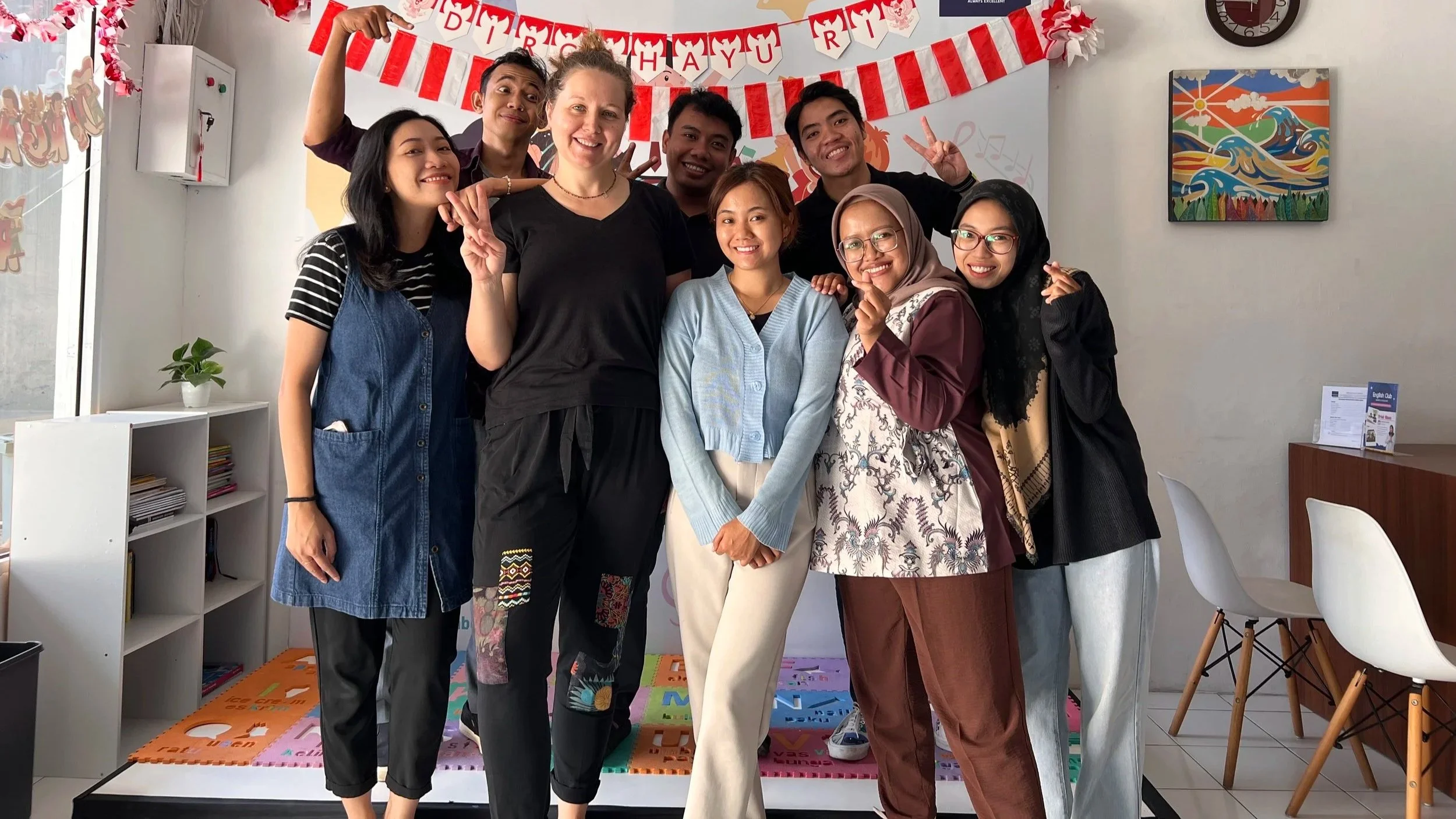
The Sama-Sama Belajar programme was created out of precisely this conviction - an Indonesian-language course that combines practical communication skills with learning about Indonesia’s culture, history, and everyday life. We want not only to teach people how to speak Indonesian, but also to help them better understand the people and communities behind the language. Sometimes the first simple sentence spoken in bahasa Indonesia can open the way to an encounter that even the best translation could not make possible.
Click HERE to learn more about the Sama-Sama Belajar Programme and start learning Bahasa Indonesia with us!
Article sources:
1. Independence Day games: Why we still play these wild August 17 traditions: https://weekender.thejakartapost.com/life/2025/08/17/independence-day-games-why-we-still-play-these-wild-august-17-traditions.html?utm
2. The history of panjat pinang as a distinctive feature of Indonesian Independence Day celebrations: https://babel.antaranews.com/berita/506689/sejarah-panjat-pinang-yang-menjadi-ciri-khas-dalam-perayaan-hut-ri?utm
3. Benedict Anderson, Imagined Communities: Reflections on the Origin and Spread of Nationalism
4. John R. Bowen, On the Political Construction of Tradition: Gotong Royong in Indonesia; The Journal of Asian Studies